

Nobody told me...
The side of Alzheimer's/Dementia that doesn't get talked about

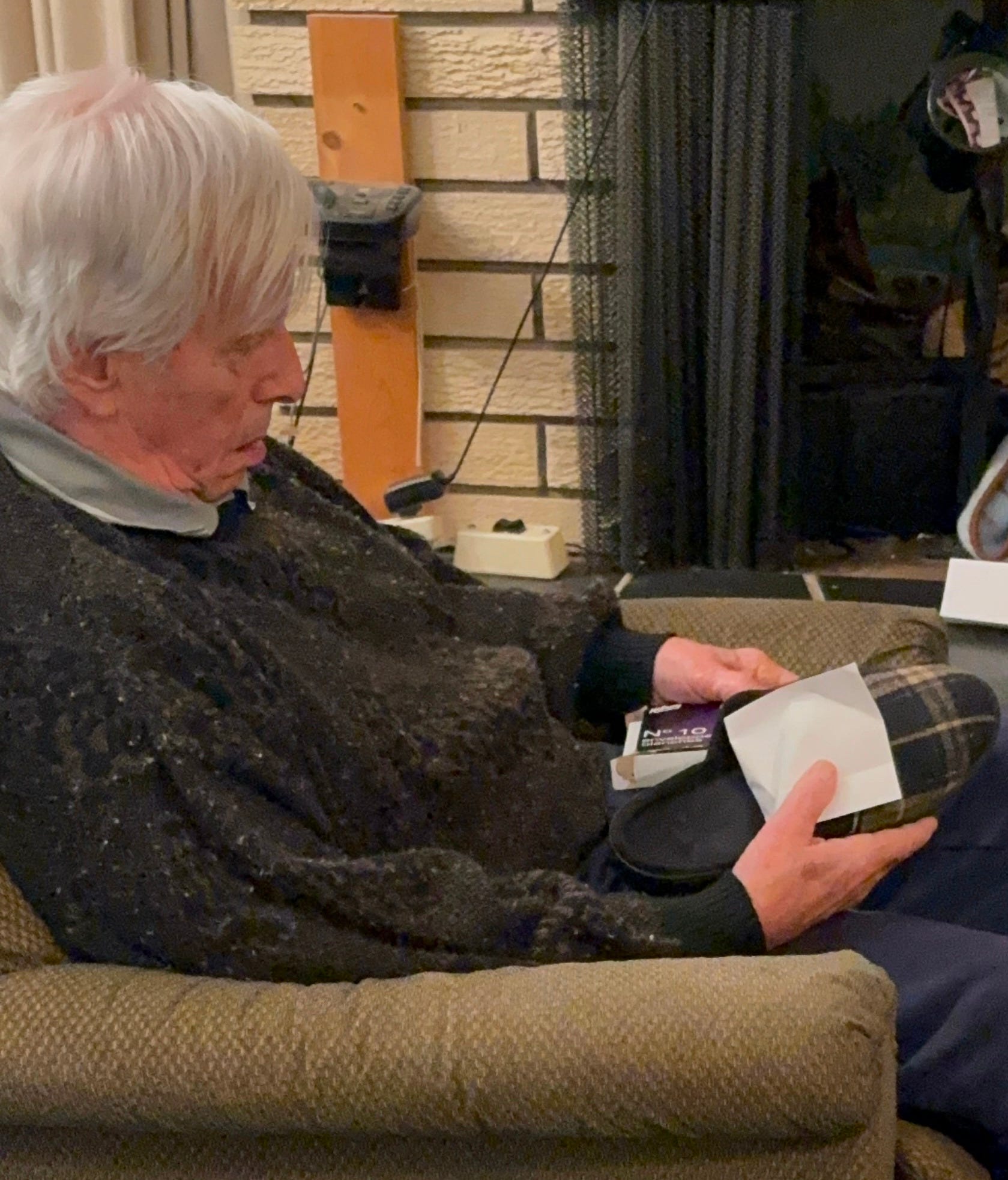
Everyone “knows” Alzheimer’s. We see it in film and TV programs and most people know someone who has dealt with or is dealing with it in a loved one. We hear about how memories disappear and loved ones no longer recognize their family, their home, or even themselves. We might try to prepare for what we expect to come, for the stages that we see in the literature, anticipating our game plan for what type of care we will pursue at what point in the progression. It isn’t until we are in the thick of it all that we learn how truly horrible and cruel this condition is. When we are dealing with it all day, every day, that is when we see the darkest side that nobody talks about. That’s when we learn the things that nobody told us.
Before I go on, I want to make it clear that by no means am I implying that my situation, or any situation, is ‘the worst’ or ‘as bad as it can be’. I know that there is more variance in the Alzheimer’s experience than there are species of butterflies in Columbia. There are and will always be others who have it worse in some way or other. In a sense, this is part of the problem leading to the tendency to suffer in silence or downplay our struggles as caregivers.
Like many others, I slid into my dad’s dementia/Alzheimer’s care thinking I was aware, well-studied, and at least somewhat prepared for the road ahead. I expected him to follow a logical pattern of decline, while understanding that the pacing would vary. In retrospect, I recognize the naivety of my belief that the doors in his mind would gradually close, and with each closing door, we would adjust and move on.
This is, after all, what we see portrayed. There are not a lot of movies focusing on the struggle of living or caring for someone with Alzheimer’s, but those that exist focus almost entirely on the memory loss and the confusion that arises from not recognizing people and places. Some, such as The Notebook, are heartwarming in their tragedy, portraying the victory of love over the challenges. Others show a more detailed, blatant expose of the more humiliating side of the conditions. The Swedish film A Song for Martin includes some painfully honest scenes involving incontinence, inappropriate behaviour in public, and violence. Even these however, only scratch the surface of the disease, failing to illustrate its full horror.
I understand why this is the case — why we don’t speak of it, show it, share it. It is too dark.
To be sure, the degradation of a lifetime of memories — of existence itself — is certainly bad enough. Every joyous moment, every new discovery, every challenge, triumph, and celebration, is gone. The loss isn’t linear, as I expected it to be. My dad doesn’t simply shift backward in time. Like the glowing embers in a campfire, memories glow and fade, shift and reignite, constantly moving. Sometimes he exists far in the past, and other times he is more current. As the fire dies, the glowing spots fade and fewer sparks rise. I’m sure my dad hasn’t know exactly who I am for years. He certainly almost never remembers my name. Sometimes a flame surges up and he recognizes some aspects of my self or my life, though usually not accurate to the current time. Most days I am simply the nice lady, and the only person he recognizes with any consistency is my daughter. Every time I leave the room and return, or he dozes off and wakes, he greets me as though I have just arrived for a visit. This has been our normal for the past 3 years.
The confusion about his surroundings is a more recent development, and we are now at the stage where he often doesn’t recognize his own home of 55 years. He has about a 50/50 record for knowing where the bathroom is, and I have to guide him to his bedroom every night. The most difficult thing for me in this phase is when he is sure that we should be going home soon. During these episodes, he becomes highly agitated that nobody is getting a move-on. Thankfully, he isn’t a wanderer and doesn’t ever try to leave the house on his own.
While it is true that we can never be fully prepared for difficulties that accompany caring for a person with Alzheimer’s, we are at least generally aware of the above effects. The memory loss and confusion are what we see portrayed in film and media, and what we hear in most conversations about the disease. What we don’t hear about, or at least I never really came across, are the deeper, darker effects. Perhaps it is considered too shocking for film, bordering on unbelievable to anyone who hasn’t seen it first hand.
The real horror of Alzheimer’s, in my opinion at least, is the loss of logical and procedural thinking. Memory loss is sad, and confusion is frustrating and scary, but when they literally are unable to understand the process of how to sit in a chair or how to follow even the simplest direction such as “raise your arm”, that is terrifying. That is the side of Alzheimer’s that nobody told me about.
Alzheimer’s doesn’t simply incapacitate the brain. It doesn’t just dissolve connections to memories. This terrible, cruel disease shatters the brain completely, leaving our loved ones with scattered connections that connect and disconnect randomly. Caregivers know well the unpredictable fluctuations in coherence, cognizance, and capacity to perform essential functions, that make care management so challenging.
The progression from one documented stage to another is not in any way clear. The guidelines and assessment charts, while helpful, are highly generalized. We can experience a clear indication of one level in some areas, and at the same time see facets of levels higher or lower on the grand scale at the same time. There is no distinct point that we can, with a clear conscience, say that “they no longer know us”, just as there is no clear transition from ‘able’ to ‘unable’ for any given function.
This is what nobody told me.
Nobody told me that on some days, my dad won’t be able to use a knife to cut his food, but the other days he will be angry that I don’t provide a knife with his dinner. Nobody told me that I would have to watch him swallow his pills every single time, because if I don’t, I may find them in the bottom of his water glass or discover half-chewed bits spit out on the floor next to his chair. Nobody told me that there would be days that I would have to physically manoeuvre him to lower his butt into his chair because he thinks he should dive into the chair head-first.
These are, to me, the most heartbreaking moments, and the fact that they come and go is the most horrifying.
Thanks for writing the Dementia Diaries, Kimiye. My mother suffered from vascular dementia and I was her lone caregiver for a decade. I have published a blog and two books about our experiences -- the dark side -- and I found my blogging cathartic and that it helped me find the humor in situations; now I publish my journal of our experiences on my Substack. Even though you have help, you are always alone. That's just part of it. I hope you have help coming in to give you respite. We caregivers tend to forget to take care of ourselves. While my mother was still living I started a writers/caregivers group on LinkedIn and in a short time had over 6,000 followers from all over the world; so, much as we feel we are alone, we are not alone. Ten of those followers remain my very good friends more than a decade later. Take care. Be well. The upside of it is, you will grow from this experience. Blessings for your dad. 🤗
This is heartbreaking. My father died of dementia. A very sad and tragic spiral down